Gaming and consoles
Gaming is one of the most dynamic fields in modern technology. What started with simple pixel-based games has grown into a global industry driven by powerful processors, high-resolution graphics, online multiplayer services and, more recently, cloud gaming. Whether you are a complete beginner or someone looking to deepen your understanding, this overview of gaming and consoles explains how the technology works, how it has evolved, and how to make sense of the choices available today.
The goal here is not to push you toward any particular product, but to give you the knowledge to understand the ecosystem: what a console actually is, how it compares to other ways of playing, and where innovation is heading.
What Exactly Is a Gaming Console?
A gaming console is a dedicated device designed primarily for playing video games. Unlike a general-purpose computer, a console runs a fixed operating system optimized for gaming, uses standardized hardware, and connects to a television or display. You insert or download a game, and it simply works — no driver updates, no compatibility worries, no manual configuration.
This simplicity is the core value of consoles. Think of it like the difference between a dedicated coffee machine and a multi-cooker: the coffee machine does one thing, but it does it reliably and without a learning curve. Consoles follow the same philosophy, which explains their lasting popularity alongside PCs.
Modern consoles typically include:
- A central processor (CPU) handling game logic and system operations
- A graphics processor (GPU) responsible for rendering images and visual effects
- Fast storage (usually SSD-based) that dramatically reduces loading times
- RAM that allows games and background services to run smoothly
- Online services for multiplayer gaming, digital stores and streaming
- Wireless controllers with features like motion sensing, haptic feedback and adaptive triggers
How Console Technology Has Evolved
Understanding today’s consoles is easier when you see the path that led here. Console innovation has generally followed a few major technological waves.
From Cartridges to Discs and Digital Downloads
Early consoles relied on ROM cartridges — physical chips containing the game. cartridges were durable and fast to read, but limited in storage capacity. The shift to CD-ROMs and later DVDs and Blu-ray discs allowed far larger, richer games with full-motion video, orchestral soundtracks and expansive worlds. The most recent shift is toward digital distribution: games are downloaded directly from online stores, and many modern consoles no longer include a disc drive at all.
The Graphics Revolution
Graphics technology has arguably driven console innovation more than anything else. Each generation has brought improvements in resolution (from standard definition to 4K), frame rates, lighting effects and realism. Techniques like ray tracing, which simulates how light behaves in the real world, now allow games to render convincing reflections, shadows and atmospheres. Alongside this, higher refresh rates and variable frame rate support have made gameplay feel noticeably smoother.
Storage and Loading Times
One of the most noticeable recent changes is the move from spinning hard drives to solid-state drives (SSDs). Loading a large open-world game that once took over a minute can now happen in a few seconds. This does not just save time — it changes game design itself, allowing developers to build seamless worlds without loading screens or to stream assets instantly as you move through a level.
Online Connectivity and Services
Consoles were once purely offline machines. Today, they are connected hubs: multiplayer matches, digital storefronts, game subscription services, media apps and social features all run through the network. This connectivity has also introduced new concepts like cross-platform play, where players on different systems can compete in the same match, and backward compatibility, which lets newer consoles run games from previous generations.
Consoles vs. Gaming PCs: How Do They Compare?
A frequent question from newcomers is whether to choose a console or build a gaming PC. Both are legitimate choices, and the right answer depends on your priorities.
- Cost and simplicity: consoles offer a fixed, predictable price and a plug-and-play experience; PCs require more setup and a wider budget range
- Performance ceiling: high-end PCs can outperform consoles, especially in frame rates and graphical settings
- Upgradability: PCs can be upgraded component by component; consoles are fixed until the next generation
- Exclusives: consoles have exclusive titles unavailable elsewhere, though many now also appear on PC
- Versatility: a PC handles work, creative tasks and gaming; a console is dedicated to entertainment
- Local multiplayer: consoles remain strong for couch co-op with friends and family
A helpful analogy: a console is like a dedicated espresso machine, while a PC is a full kitchen. The espresso machine is simpler and consistent; the kitchen can do far more, but requires more knowledge and investment.
The Rise of Handheld and Hybrid Consoles
One of the most interesting areas of innovation is portable gaming. Handheld consoles have existed for decades, but recent years have seen a convergence between home and portable systems. Hybrid designs let you dock the device to a TV for big-screen play, then detach it and take the same games on the go. More recently, powerful handheld PCs running full PC gaming libraries have entered the market, blurring the line between consoles and computers.
For many players, this flexibility answers a real need: gaming that fits around commuting, travel and busy schedules without sacrificing quality.
Cloud Gaming: Playing Without the Hardware
Cloud gaming is perhaps the most disruptive recent development. Instead of running a game on your device, the game runs on powerful remote servers, and you receive a live video stream of the gameplay while your inputs are sent back instantly. Your device only needs a decent internet connection — the heavy lifting happens elsewhere.
The potential benefits are significant:
- No expensive hardware purchase required
- Instant access to games without long downloads
- Play the same game across phones, tablets, TVs and laptops
- Reduced e-waste, since fewer devices are manufactured and discarded
The main limitation is network quality. Because every input travels to a server and back, latency (delay) matters enormously. Players on fast, stable fiber connections often have a smooth experience, while those on slower or inconsistent connections may notice input lag or reduced image quality. For this reason, cloud gaming is best seen as a complement to local hardware rather than a full replacement — at least for fast-paced competitive games.
Choosing a Console: Practical Considerations
If you are considering a console, a simple framework can help you decide without getting lost in marketing claims:
- Identify your games first. Check which system hosts the titles you actually want to play, especially exclusives.
- Consider who plays with you. Households with children or regular guests benefit from local multiplayer and family-friendly libraries.
- Factor in ongoing costs. Online multiplayer usually requires a subscription, and digital game purchases add up over time.
- Check your display and network. A 4K TV with HDMI 2.1 lets you fully enjoy modern consoles; a good internet connection matters for downloads and cloud features.
- Think about space and lifestyle. Compact living, frequent travel or shared living spaces may favor handheld or hybrid designs.
Imagine a fictional example: Sarah plays story-rich single-player games on weeknights and wants minimal setup, so a standard home console suits her well. Her friend Marc commutes daily and plays in short bursts, so a handheld or hybrid device fits his rhythm better. Neither choice is wrong — the best device is the one matching your habits.
Emerging Trends Shaping the Future of Gaming
Several technological directions are worth watching, as they will shape the next era of gaming:
- AI-assisted development and gameplay: machine learning is being used to create more realistic non-player characters, automate game testing and even generate assets
- Higher frame rates and visual fidelity: expectations continue to rise toward 120 frames per second and richer ray-traced worlds
- Virtual and augmented reality: VR headsets offer immersive experiences, while AR blends games into the real world
- Sustainability: manufacturers are increasingly focusing on energy efficiency, recycled materials and repairability
- Subscription ecosystems: large game libraries available for a monthly fee are changing how people access and discover games
Frequently Asked Questions
Do I need the newest console to enjoy gaming?
No. Many excellent games run on previous-generation hardware, and backward compatibility means newer consoles often support older titles. Choose based on the games and experience you want, not just the latest specifications.
Are digital games as good as physical discs?
Functionally, yes — the game itself is identical. The differences are practical: digital games are convenient and instant but tied to your account, while physical discs can be resold, lent or played offline. Some players keep a mix of both.
Is console gaming more affordable than PC gaming?
Generally, the entry cost is lower and more predictable with a console. Over the long term, PC gamers can save on game sales and hardware reuse, while console gamers benefit from steady subscription pricing and resale value on physical games.
What is latency, and why does it matter?
Latency is the delay between your action and the on-screen result. In local play it is negligible, but in cloud gaming or online multiplayer, high latency can make fast games feel sluggish. A stable, fast connection is the key factor.
Final Thoughts
Gaming and consoles sit at a fascinating intersection of computer science, design and entertainment. From solid-state storage and ray tracing to cloud streaming and AI-driven characters, the technology keeps evolving — but the fundamentals remain simple: dedicated hardware, great games and experiences shared with others. By understanding how these systems work and what each option offers, you can make informed choices and get far more enjoyment out of whatever way you choose to play.

Dive into a new world with virtual reality gaming experiences
Virtual reality (VR) gaming is revolutionizing the way we experience interactive entertainment. By immersing players in fully realized digital environments, VR technology is pushing the boundaries of what’s possible in gaming. From heart-pounding action adventures to mind-bending puzzle games, VR…
Lire la suiteHow do immersive graphics redefine your gaming experience?
The world of gaming has undergone a remarkable transformation, with immersive graphics at the forefront of this revolution. As technology advances, the line between virtual and reality continues to blur, offering players unprecedented levels of engagement and realism. From ray…
Lire la suiteWhy are independent games taking over the gaming industry?
The gaming landscape has undergone a seismic shift in recent years, with independent games carving out an increasingly dominant position in the market. This transformation is reshaping player expectations, challenging industry norms, and redefining what it means to create successful…
Lire la suiteCloud gaming : play without needing high-end hardware
Cloud gaming is revolutionizing the way we experience video games. This innovative technology allows players to enjoy high-quality gaming experiences without the need for expensive, powerful hardware. By leveraging remote servers and streaming technology, cloud gaming platforms deliver console-quality graphics…
Lire la suite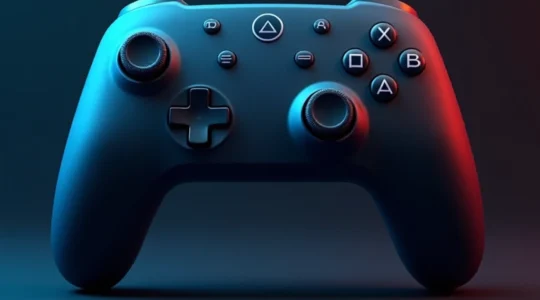
Play in comfort with ergonomic controllers designed for serious gamers
Gaming has evolved far beyond casual entertainment, becoming a serious pursuit for millions worldwide. As players invest countless hours honing their skills, the importance of ergonomic gaming controllers cannot be overstated. These precision-engineered devices are designed to enhance performance, reduce…
Lire la suiteGet ready to battle your friends with epic multiplayer experiences
The world of multiplayer gaming has evolved dramatically, transforming how we connect and compete with friends and strangers alike. From the early days of LAN parties to the current era of cloud gaming, the landscape has shifted to offer more…
Lire la suiteThe multiplayer experience: connect, compete, and conquer with friends
Multiplayer gaming has revolutionized the way we interact with digital entertainment, transforming solitary experiences into vibrant social ecosystems. As technology advances, the ability to connect, compete, and conquer alongside friends and strangers alike has become an integral part of modern…
Lire la suite